
Marketing
Top Tips to Help Visibility on Big G and LLMs

What this covers
- The Inputs Are Not the Same
- The Bing Dependency
- Mentions Without Links
- Reviews Are Read, Not Counted
- Forums Outrank Company Websites
- Structured Data Is Doing More Work Than It Was
- The Measurement Problem Nobody Has Solved
- What to Do First
- What the Standard Advice Misses
- The Summary
A business can occupy the top of Google for its main commercial term and be entirely absent when somebody asks an AI assistant the same question in plain language.
This is not a bug in either system. They are different systems, drawing on different inputs, and a decade of optimization aimed at one of them produces very little advantage in the other.
For anyone whose customers have started asking questions conversationally rather than typing keywords, that gap is now a commercial problem rather than a curiosity.
The Inputs Are Not the Same
Large language model assistants draw on search index data, on what was in their training data, and increasingly on live retrieval performed at the moment of the question.
Backlinks carry less weight in AI retrieval than in classic search. This is the single most consequential difference. Link authority is the load-bearing signal in Google’s organic ranking and the thing most SEO budgets are ultimately spent on. An assistant assembling an answer about local businesses is not running a link graph calculation.
What it is doing looks much more like reading. It draws on text about the business, wherever that text lives, and assembles an answer from it.
| Signal | Weight in classic search | Weight in AI retrieval |
| Backlinks | High | Low |
| Exact-match domain | Moderate | Negligible |
| Page speed and core web vitals | Moderate | Negligible |
| Unlinked brand mentions | Low | High |
| Review text and specificity | Moderate | High |
| Structured data | Moderate | High |
| Community discussion | Low | High |
The right column is close to being the inverse of a conventional SEO checklist, which is why businesses that have invested heavily in one column are frequently absent from the other.
The Bing Dependency
ChatGPT retrieves live results through Bing. That single technical fact has an immediate practical consequence that most local businesses have never acted on.
A business with no Bing Places listing is missing from the index that the most widely used assistant queries when it needs current local information. Not ranked poorly. Missing.
Creating that listing is free, takes under an hour, and is the highest-return single action available in this area. It is also skipped almost universally, because Bing’s own search share made it look irrelevant, and that reasoning was sound right up until it was not.
The same logic extends to the other major directories. Yelp, the Better Business Bureau and Apple Maps all carry business information into places assistants read, and they matter for reasons that have nothing to do with the traffic they send directly.
Mentions Without Links
An unlinked brand mention carries weight in AI retrieval. This is a genuine reversal of a long-standing assumption.
Classic link building treats an unlinked mention as a missed opportunity, and outreach campaigns exist specifically to convert mentions into links. In AI retrieval the mention itself is the asset. The business name appearing in relevant text, in a credible place, is what makes it available to be recalled and cited.
That changes what a public relations placement is worth. A piece in a local publication that names a business without linking to it was previously a modest brand outcome and no SEO outcome. It is now a direct input to how an assistant answers questions about that category in that city.
It also changes the value of being written about at all, which is a different activity from being linked to and requires different work.
Reviews Are Read, Not Counted
Review text provides matchable detail. An assistant answering a specific question is looking for text that addresses it.
A business with two hundred reviews saying “great service, highly recommend” has an excellent rating and almost nothing an assistant can use to answer a specific question. A business with forty reviews that describe particular circumstances, particular services, particular problems solved, has a body of text that matches specific queries.
The practical implication for review generation is uncomfortable, because the standard approach optimizes for the wrong thing. Asking for a rating produces ratings. Asking a customer what the job was and how it went produces text, and the text is what gets read.
Platform diversity matters here too. Assistants draw from multiple review sources rather than exclusively from Google, which makes a business with reviews in one place narrower than its rating suggests.
Forums Outrank Company Websites
Community forums are frequently cited by AI assistants, often above the websites of the businesses being discussed.
The reason is that assistants weight what appears to be independent testimony above what is obviously self-description. A company page saying it is reliable is a claim. A thread in which several people discuss their experience is evidence, and it reads as such.
There is an obvious temptation attached to that observation and it is worth naming as a mistake rather than a tactic. Communities detect and punish marketing, and an account posting promotionally is removed along with everything it contributed. The only version that works is genuine participation over time by someone who actually knows the subject, which is slow and is not a campaign.
For a business with real expertise, that is a lower barrier than it sounds. The person who does the work already has the answers. What is missing is the habit of answering in public.
Who does the work is the substance behind all of it, which is why the team behind our local search work is a page rather than a formality, and the agency profile carries the same information where an assistant is more likely to read it.
Structured Data Is Doing More Work Than It Was
Schema markup describes a business in structured form. It has always been useful and it has become considerably more so, because a system assembling a factual answer benefits from facts already labeled as facts.
The practical version is unglamorous: organization markup site-wide, local business markup on the location page, service markup on service pages, FAQ markup where questions are genuinely answered, and review markup where reviews are displayed. Validated, rather than assumed to be working.
Most sites either lack it or carry a partial implementation generated years ago by a plugin and never checked since. Both are common and both are cheap to fix.
The Measurement Problem Nobody Has Solved
There is no equivalent of a rank tracker for this.
Search Console does not report AI Overview appearances. No tool reliably reports whether an assistant recommended a business, because the answer varies by phrasing, by session, and by user context, and there is no impression log to read.
The available approaches are all partial. Asking assistants a set of consistent questions periodically and recording what comes back is manual and directionally useful. Brand monitoring tools have started reporting AI visibility with real limitations. Neither is measurement in the sense that rank tracking was.
The correct response is to say so plainly rather than to invent a metric. Work in this area is currently justified by reasoning about the mechanism rather than by a dashboard, and clients deserve to be told which of those they are being sold.
What to Do First
Ordering the available work by return rather than by novelty.
| Action | Effort | Return | Why |
| Claim and complete Bing Places | Under an hour | Highest | The index the leading assistant queries |
| Complete Yelp, Apple Maps, BBB listings | A few hours | High | Read widely, cheap, one-off |
| Validate schema on every page type | A few hours | High | Facts already labeled as facts |
| Ask for descriptive reviews, not ratings | Ongoing, free | High | Text is what gets matched |
| Earn mentions in local publications | Ongoing | High | No link required for value |
| Participate genuinely in relevant communities | Slow, ongoing | High | Independent testimony outranks self-description |
| Buy links | Expensive | Low here | Weak signal in AI retrieval |
The first three are one-off tasks that most businesses have never done, cost nothing beyond time, and are complete within a week.
The bottom row is included because it is where local budgets currently go. Links remain valuable in classic search and they are close to irrelevant to the question of whether an assistant recommends a business, which makes a link-only program a bet on one of the two systems.
What the Standard Advice Misses
Most published guidance on this subject treats AI optimization as an extension of SEO, with a few additions bolted on. The signal weights are close to inverted, which makes it a parallel discipline rather than an extension.
The second omission is the Bing dependency. It is the most actionable fact available, it costs nothing to act on, and it is buried in most coverage beneath advice about content quality.
The third is the measurement gap. A great deal of writing on this topic implies results can be tracked in the usual way. They cannot yet, and pretending otherwise sets up exactly the disappointment that follows any promise nobody can verify.
The Summary
AI assistants and search engines read different signals. Links, exact-match domains and page speed carry little weight in AI retrieval. Mentions, review text, structured data and community discussion carry a great deal.
ChatGPT reaches live local information through Bing, which makes a free Bing Places listing the highest-return action available and one almost nobody has taken.
Reviews are read rather than counted, so specific text beats a high count. Forums are cited above company websites because independent testimony reads as evidence.
And none of it is measurable the way rank was, which is worth admitting rather than papering over.
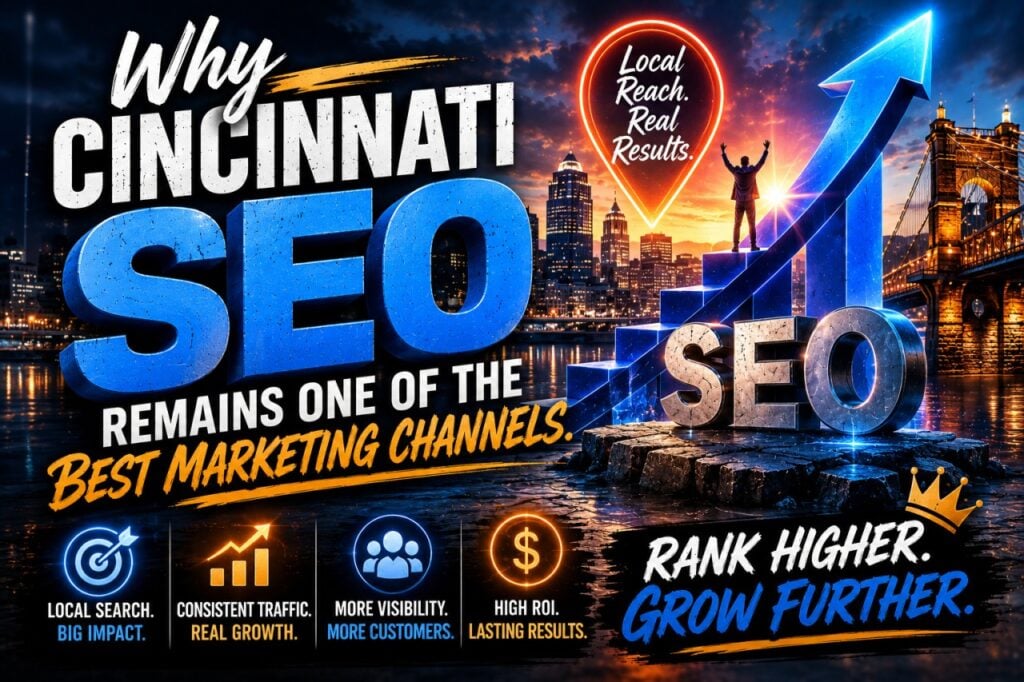
Digital marketing trends constantly evolve, but one strategy continues to deliver long-term results for businesses of all sizes: search engine optimization. While paid advertising, social media, and other platforms come and go in popularity, SEO remains one of the most effective ways to build consistent online visibility and attract qualified customers.
That’s why businesses continue investing in Cincinnati SEO as a core part of their marketing strategy. SEO helps companies improve rankings, generate organic traffic, increase brand authority, and create sustainable growth over time.
Let’s explore why SEO continues to be one of the best marketing channels available today.
Delivers Long-Term Organic Traffic
Unlike paid ads that stop generating traffic when the budget ends, SEO creates long-lasting visibility.
Benefits include:
- Ongoing website traffic from search engines
- Sustainable lead generation
- Reduced dependence on paid advertising
With Cincinnati SEO, businesses can build momentum that continues delivering value over time.
Reaches High-Intent Customers
SEO targets users actively searching for products or services.
This means businesses can connect with:
- Customers ready to make purchasing decisions
- Local users searching for nearby businesses
- People looking for specific solutions online
High-intent traffic often leads to better conversion rates.
Builds Trust and Credibility
Websites that appear near the top of search results are often viewed as more trustworthy.
SEO helps businesses:
- Strengthen online authority
- Improve brand recognition
- Establish credibility within their industry
Strong search visibility increases customer confidence and trust.
Provides Excellent Return on Investment
SEO is often one of the most cost-effective marketing strategies.
Compared to traditional advertising, SEO can provide:
- Lower long-term customer acquisition costs
- Ongoing lead generation
- Sustainable online growth
Businesses using Cincinnati SEO often benefit from compounding marketing results over time.
Supports Local Business Growth
Local SEO is especially valuable for businesses serving specific geographic areas.
Optimization strategies help businesses:
- Appear in local search results and Google Maps
- Attract nearby customers
- Increase calls, visits, and appointments
Local visibility can significantly impact business growth.
Improves Website User Experience
Modern SEO is closely tied to user experience.
Optimization efforts often include:
- Faster website speeds
- Mobile-friendly design
- Better navigation and site structure
These improvements benefit both search rankings and customer engagement.
Strengthens Content Marketing Efforts
SEO and content marketing work together to drive visibility and authority.
Businesses can create:
- Educational blog content
- Service and location pages
- Industry-specific resources and FAQs
With Cincinnati SEO, content becomes a valuable tool for attracting and educating potential customers.
Helps Businesses Compete Online
Even smaller businesses can compete effectively through SEO.
By targeting strategic keywords and local searches, businesses can:
- Increase visibility against larger competitors
- Reach niche audiences
- Build stronger digital presence within their market
SEO levels the playing field in competitive industries.
Generates Measurable Results
SEO performance can be tracked and analyzed in detail.
Businesses can measure:
- Keyword rankings
- Organic traffic growth
- Conversion rates and lead generation
This data allows businesses to continuously improve their marketing strategies.
Continues Adapting to Digital Trends
SEO has remained effective because it evolves alongside technology and user behavior.
Modern SEO now includes:
- Mobile optimization
- Voice search considerations
- User experience and Core Web Vitals
Businesses investing in Cincinnati SEO can continue adapting to changing digital trends and customer expectations.
FAQs
Why is SEO considered a strong marketing channel?
SEO provides long-term visibility, targeted traffic, and sustainable online growth.
How does Cincinnati SEO help local businesses?
It improves local search rankings, Google Maps visibility, and customer engagement.
Is SEO better than paid advertising?
SEO offers long-term organic growth, while paid ads provide immediate visibility. Many businesses use both together.
How long does SEO take to work?
SEO is a long-term strategy, and significant results often take several months to develop.
Can small businesses benefit from SEO?
Absolutely. SEO helps businesses of all sizes compete more effectively online.
Final Thoughts
While digital marketing platforms continue to change, SEO remains one of the most reliable and effective ways to grow a business online. It provides long-term visibility, attracts highly targeted traffic, and builds trust with potential customers.
By investing in Cincinnati SEO, businesses can create sustainable marketing momentum that continues delivering results well into the future.
For companies looking to increase visibility, improve lead generation, and strengthen their online presence, SEO continues to be one of the smartest marketing investments available today.
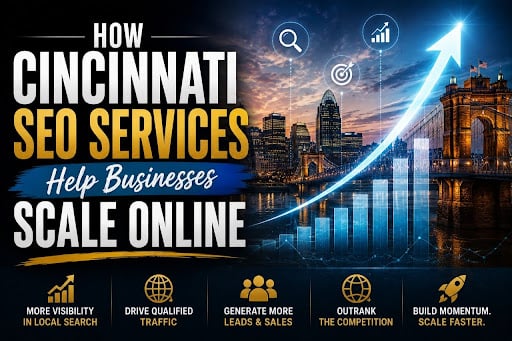
Growing a business online requires more than just having a website. In today’s competitive digital landscape, companies need visibility, consistent traffic, strong brand authority, and effective lead generation to scale successfully.
That’s why many businesses invest in Cincinnati SEO services to improve their online presence and create long-term growth opportunities. SEO helps businesses attract targeted customers, increase search visibility, and build sustainable online momentum over time.
Let’s explore how professional SEO services help businesses scale online effectively.
Increasing Search Engine Visibility
The first step in online growth is getting found by potential customers.
SEO helps businesses:
- Rank higher in search engine results
- Increase visibility for important keywords
- Reach customers actively searching for services
With Cincinnati SEO services, businesses can improve their online exposure and attract more qualified traffic.
Driving Consistent Organic Traffic
Unlike paid advertising, SEO focuses on generating long-term organic traffic.
Benefits include:
- Ongoing website visitors without constant ad spend
- Sustainable lead generation
- Improved long-term marketing ROI
Consistent traffic creates a strong foundation for business growth.
Targeting High-Intent Customers
SEO attracts users who are actively searching for products or services.
This means businesses can reach:
- Customers ready to make purchasing decisions
- Local users searching for nearby services
- Highly relevant audiences with strong intent
Targeted traffic often leads to higher conversion rates.
Building Brand Authority and Trust
Higher search rankings often increase credibility in the eyes of customers.
Professional SEO strategies help businesses:
- Publish high-quality content
- Improve online reputation
- Build authority within their industry
With Cincinnati SEO services, businesses can strengthen trust and recognition online.
Improving Website User Experience
SEO is closely connected to user experience and website performance.
Optimization efforts may include:
- Faster loading speeds
- Mobile-friendly website design
- Clear navigation and site structure
A better user experience keeps visitors engaged and improves conversion potential.
Supporting Local Business Growth
For local companies, local SEO plays a major role in scaling online.
This includes:
- Optimizing Google Business Profiles
- Improving map visibility
- Targeting location-based searches
Local SEO helps businesses dominate their regional markets.
Generating More Leads and Conversions
SEO is not just about traffic, it’s about attracting customers who take action.
Effective strategies focus on:
- Conversion-optimized landing pages
- Strategic keyword targeting
- Strong calls to action
This helps turn website visitors into paying customers.
Expanding Into New Markets
As businesses grow, SEO can support expansion into additional locations and industries.
Scalable SEO strategies may include:
- Targeting new service areas
- Creating content for broader audiences
- Ranking for additional keywords and topics
With Cincinnati SEO services, businesses can grow beyond their original market reach.
Providing Long-Term Marketing Value
SEO continues delivering benefits long after optimization efforts begin.
Compared to short-term advertising campaigns, SEO provides:
- Lasting search visibility
- Ongoing traffic generation
- Stronger digital brand presence
This long-term value makes SEO one of the most effective growth strategies available.
Using Data to Continuously Improve
Professional SEO relies heavily on analytics and performance tracking.
Businesses gain insights into:
- Traffic trends and keyword rankings
- User behavior and engagement
- Conversion opportunities and growth areas
Continuous optimization helps businesses scale more efficiently over time.
FAQs
What are Cincinnati SEO services?
They are professional SEO strategies designed to improve online visibility and search engine rankings for businesses.
How does SEO help businesses grow?
SEO increases traffic, improves visibility, attracts qualified leads, and strengthens online authority.
Is SEO better than paid advertising?
SEO provides long-term organic growth, while paid ads offer short-term visibility. Many businesses benefit from both.
How long does SEO take to show results?
SEO is a long-term strategy, and noticeable improvements often take several months.
Can local businesses benefit from SEO?
Absolutely. Local SEO helps businesses attract nearby customers and dominate local search results.
Final Thoughts
Scaling a business online requires visibility, trust, and consistent customer engagement. SEO provides a powerful long-term strategy for achieving all three while creating sustainable digital growth.
By investing in Cincinnati SEO services, businesses can improve search rankings, attract targeted traffic, generate more leads, and build a stronger online presence over time.
In today’s digital-first world, SEO remains one of the smartest and most effective ways for businesses to scale successfully online.
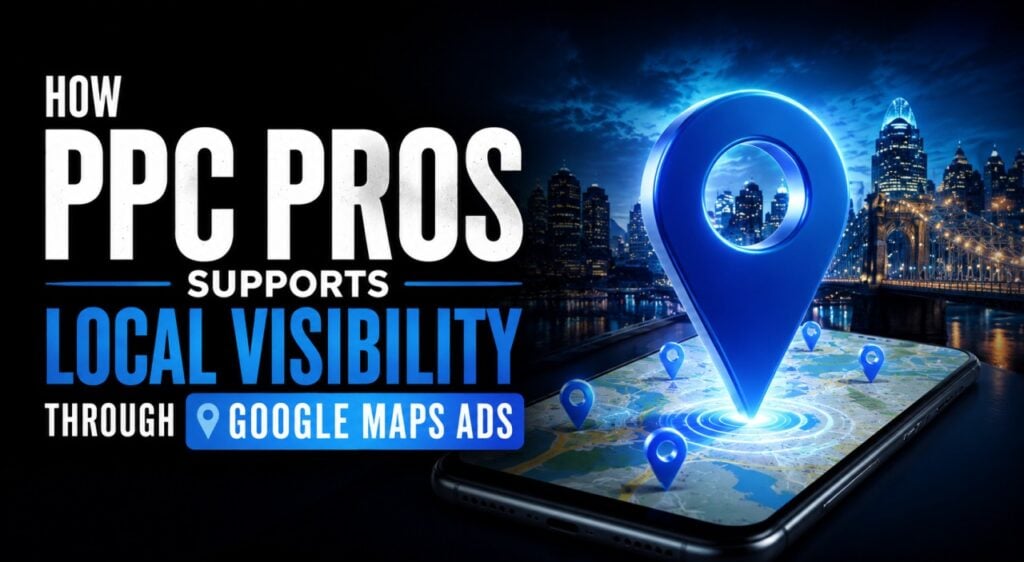
For local businesses, visibility is everything. When potential customers search for nearby services, restaurants, or experiences, appearing at the top of local search results can make a major difference in traffic and conversions.
That’s why businesses rely on PPC Pros to maximize local visibility through Google Maps Ads. These highly targeted ads help companies stand out directly within Google Maps and local search results, making it easier for customers to find and contact them.
Let’s explore how Google Maps Ads work and how PPC Pros uses them to improve local visibility.
What Are Google Maps Ads?
Google Maps Ads are paid placements that appear within Google Maps and local search results.
These ads help businesses:
- Appear above competitors in map searches
- Increase local brand awareness
- Drive calls, visits, and website traffic
With support from PPC Pros, businesses can use these ads strategically to attract nearby customers.
Reaching Customers With Local Intent
Google Maps Ads target users actively searching for nearby businesses.
These searches often include:
- “Near me” queries
- Local service searches
- Immediate purchase intent
This high-intent traffic makes Maps Ads especially valuable for local businesses.
Improving Visibility in Competitive Areas
In crowded markets, organic visibility alone may not be enough.
Google Maps Ads help businesses:
- Stand out in highly competitive locations
- Gain priority placement on the map
- Increase exposure to local customers
A strong local advertising strategy gives businesses a competitive edge.
Optimizing Google Business Profiles
An optimized Google Business Profile is essential for effective Maps Ads.
PPC Pros helps improve:
- Business descriptions and categories
- Contact information accuracy
- Photos, reviews, and updates
A complete and optimized profile increases credibility and engagement.
Driving More Calls and Directions
Google Maps Ads are designed to encourage immediate action.
Potential customers can quickly:
- Call the business directly
- Request directions
- Visit the website
This convenience helps increase conversions and foot traffic.
Geo-Targeting the Right Audience
Location targeting is one of the biggest advantages of Maps Ads.
Campaigns can focus on:
- Specific cities or neighborhoods
- Nearby customers within a chosen radius
- Areas with high conversion potential
With PPC Pros, businesses can ensure ads reach the most relevant audience.
Leveraging Mobile Search Traffic
Most local searches happen on mobile devices.
Google Maps Ads help businesses capture:
- On-the-go users
- Travelers searching nearby
- Customers ready to make immediate decisions
Mobile-focused advertising improves local reach and engagement.
Using Reviews to Strengthen Trust
Customer reviews heavily influence local search performance.
Maps Ads become more effective when businesses have:
- Positive ratings
- Frequent customer feedback
- Strong online reputations
A trusted local presence encourages more clicks and visits.
Tracking Performance and Optimization
Successful local campaigns require ongoing analysis and refinement.
PPC Pros monitors:
- Click-through rates
- Calls and direction requests
- Conversion trends and local engagement
Continuous optimization helps improve results over time.
Supporting Long-Term Local Growth
Google Maps Ads are not just about short-term traffic.
They also help businesses:
- Build stronger local brand recognition
- Increase repeat customer engagement
- Establish long-term visibility in the community
With PPC Pros, local advertising becomes part of a broader growth strategy.
FAQs
What are Google Maps Ads?
They are paid ads that appear in Google Maps and local search results to increase business visibility.
Why are Maps Ads effective?
They target users with strong local intent who are often ready to take action.
Can Google Maps Ads increase foot traffic?
Yes. They help customers find directions and contact businesses directly.
Do reviews impact Maps Ads performance?
Absolutely. Strong reviews improve trust and engagement.
Why work with PPC Pros for local advertising?
They provide strategic targeting, optimization, and ongoing campaign management for better local visibility.
Final Thoughts
Local visibility has become essential for businesses competing in today’s digital landscape. Appearing prominently in Google Maps can significantly increase calls, visits, and customer engagement.
By working with PPC Pros, businesses can take full advantage of Google Maps Ads to reach nearby customers at the exact moment they’re searching. From geo-targeting and profile optimization to performance tracking and ongoing improvements, these campaigns help businesses strengthen their local presence and drive meaningful results.
For companies looking to grow their visibility in local search, Google Maps Ads are one of the most effective tools available today.

Top Tips to Help Visibility on Big G and LLMs
How to Build Psychological Safety on Your Team

Alex Shalavi Across Commercial Real Estate and Contemporary Art

How Pool Builders Plan Pool Landscaping

How to Choose the Perfect Home Decor for Your Business

Anubhav Mittal and the Role of IIT Kanpur and Harvard Business School in Building a Finance Career

The Shock Absorbers: Protecting Tumblers’ Joints With the Right Mat Thickness

Managed IT vs. In-House IT: Which Is Better for Growing Edmonton Companies?

Smart Thermostats: Are They Worth It?

When the Prescription Was Legitimate: Dependence That Starts in a Doctor’s Office
-
 Destinations2 years ago
All-Inclusive Resorts Outside The Caribbean!
-
 Destinations2 years ago
Touring Nashville!
-
 Destinations2 years ago
Safe Travel Spots For Travel Currently
-
 Destinations2 years ago
Stay With The Animals At These Awesome Hotels
-
 Destinations2 years ago
The Best Cruises For Every Family Type
-

 Destinations2 years ago
The Cheapest Travel Destinations in the World in 2020
-
 Destinations2 years ago
Cheapest Caribbean Destination: Punta Cana VS Cancun
-
 Featured2 years ago
How To Make A Healthy Gas Station Meal