
Artificial Intelligence
What a Deck Inspection Typically Covers


What this covers
-
The Damage You Can See Is Rarely the Problem
-
Start With the Ledger
-
Then the Post Bases
-
The Screwdriver Test
-
What the Age of the Deck Tells You
-
Surface Problems Versus Structural Problems
-
Springy and Wobbly Mean Different Things
-
The Railing Is Not Cosmetic
-
When Repair Stops Making Sense
-
What a Real Inspection Covers
-
The Short Version
Come home after a long stretch away and the deck is the part of the house that aged while you were gone. Everything else was inside, dry, and holding still. The deck sat out in the weather with nobody standing on it.
Most people look at a tired deck and see the gray boards, the lifted splinters, the peeling finish. Then they price refinishing, which is the wrong first move, because the surface tells you almost nothing about whether the thing is safe.
Here is what actually matters, roughly in the order a professional checks it.
The Damage You Can See Is Rarely the Problem
Weathered decking is a cosmetic condition. Boards go gray because sunlight breaks down the surface fibers. That is ugly and it is not structural.
The failures that hurt people happen in the parts nobody looks at. The connection to the house. The bases of the posts. The hardware holding joists up. All of it either tucked behind something or close to the ground, and all of it out of sight precisely because it is doing the structural work.
So a deck can look terrible and be perfectly sound, or look freshly stained and be one load away from letting go. Appearance and safety are close to unrelated on a deck, which is the single most useful thing to understand about them.
Start With the Ledger
The ledger is the board bolted to the house that the deck frame hangs off. When a deck collapses, this is overwhelmingly where it starts, and it fails for two reasons that compound each other.
The first is fastening. Older decks were often nailed on. Nails hold badly against being pulled straight out, which is exactly the direction a loaded deck pulls, and that loading is cyclic as people move around. Modern practice is through-bolts or structural screws in a specified pattern, because they resist pull-out in a way nails never did.
The second is water. The ledger sits tight against the siding, which makes a seam that water wants to get into. Without proper flashing above it, water runs down the wall, gets behind the board, and sits there against both the ledger and the house framing. Nothing shows on the outside while the wood behind quietly turns to pulp.
You cannot usually inspect this from above. What you can do is look underneath, from the yard, where the deck meets the wall. Dark staining on the siding below the deck line, a visible gap, rust streaks, or any sign of water tracking down is worth taking seriously. So is the absence of visible metal flashing.
Then the Post Bases
Second place for real failures, and easy to check.
Posts should not sit directly on soil or in a puddle of concrete that holds water around them. The standoff detail, where a metal base lifts the post slightly clear so water can drain and air can get in, exists because wood in permanent contact with wet ground has a limited life no matter what it was treated with.
Grab each post and push sideways, firmly. There should be no movement at the bottom. Look for dark soft wood at the base, a post sitting in dirt, or planting growing up tight against it.
The Screwdriver Test
This one takes ten minutes and it is the test that actually finds rot.
Rot softens wood before it changes its color much. A board can look fine and be gone underneath. So you probe it.
Take a screwdriver or an awl and press the tip firmly into the wood. Sound wood resists and you feel it stop. Rotten wood takes the tip in like firm cheese, sometimes half an inch with light pressure.
Where to probe:
-
The ledger, anywhere you can reach it
-
The bases of all posts, especially on the shaded side
-
Joist ends where they meet the ledger or beam
-
Anywhere water sits, under planters, below a step, in a corner that stays damp
-
Stair stringers where they touch the ground
If the tip sinks anywhere structural, stop assessing and get somebody out. One soft joist end is a repair. Soft wood at the ledger is not a project you keep using the deck during.
What the Age of the Deck Tells You
Age is a shortcut to knowing which failures to look for first, because building practice changed inside the lifespan of a lot of standing decks.
Older structures are far more likely to be nailed at the ledger rather than bolted, and more likely to have no flashing above that connection at all. Both were common once and neither is acceptable now. If a deck predates the current approach, the ledger moves to the top of the list regardless of how the rest of it looks.
There is a second change that catches people out. The chemistry of pressure treated lumber was reformulated in the early 2000s, and the newer treatment is harder on metal than the old one was. Plain or lightly coated fasteners in contact with newer treated wood corrode faster than the same hardware would have in older lumber. On a deck built around that transition, or repaired with new lumber and old leftover hardware, the fasteners are worth a close look even where the wood is sound.
None of this means an old deck is unsafe. It means the inspection has a different starting point, and knowing the approximate build year saves a great deal of guessing.
Surface Problems Versus Structural Problems
|
What you see |
What it usually is |
How urgent |
|
Gray, weathered boards |
Sun damage to the surface |
Cosmetic |
|
Splinters and raised grain |
Finish has gone, wood is dry |
Cosmetic, a splinter risk |
|
Popped or rusted screws |
Wood movement, or wrong hardware |
Worth fixing properly |
|
Soft spots underfoot |
Rot in the decking or the joist under it |
Check now |
|
Dark stains below the ledger |
Water getting behind the connection |
Check now |
|
Wobble at the top of a post |
Bracing or connection issue |
Check now |
|
A railing that moves |
Post attachment failing |
Stop using that side |
The top three are a weekend. The bottom four are somebody with a flashlight and a pry bar.
Springy and Wobbly Mean Different Things
People describe both as “the deck feels off” and they are unrelated faults.
Springy is vertical. The floor flexes when you walk. That is usually a joist spanning further than it comfortably should, or a joist that has lost strength to rot. Unpleasant, often not dangerous, sometimes fixed by adding blocking or a mid-span beam.
Wobbly is sideways. The whole structure sways slightly when people move across it. That is a lateral bracing problem, and on a raised deck it is the one to take seriously, because the sideways force on a tall deck acts through a long lever onto the connections at the bottom.
A deck that does both, especially one more than a few feet off the ground, is telling you the frame is not doing its job.
The Railing Is Not Cosmetic
A railing that moves when you lean on it is a failed safety component, not a loose fitting.
Railing posts take a surprisingly large sideways load, because that is what happens when somebody falls against one. The weak point is almost always where the post attaches to the frame, and the common error is a post bolted only through the decking or the rim with too little holding it. If a railing post rocks, treat that stretch as out of use until somebody has looked at the attachment from underneath.
This matters most on the parts of a deck that are highest off the ground, which tends to be the far corner, which tends to be where everyone stands to look at the view.
When Repair Stops Making Sense
Repair is usually the cheaper answer and not always. The honest test is how much of the structure is involved.
|
Situation |
Usually |
|
Decking tired, frame sound |
Re-deck, keep the frame |
|
A few joist ends soft |
Repair, sister or replace those joists |
|
Ledger compromised |
Serious repair, often with siding off |
|
Posts and footings failing |
Approaching a rebuild |
|
Frame undersized for the span |
Rebuild, because repair cannot fix geometry |
|
Multiple systems failing at once |
Rebuild, and it will cost less than chasing it |
The trap is sequential repair. Fix the boards this year, a post next year, the stairs the year after, and you spend more than a rebuild would have while still owning an old deck. Anyone at that stage is better off getting an honest read on whether to repair or replace before committing to the first stage of it.
What a Real Inspection Covers
If you bring somebody in, the visit should include the underside. An assessment done entirely from on top of the deck is not an assessment, because every failure listed above lives underneath.
Expect them to get under it where there is access, probe the ledger and post bases, check the hardware, look at how the stairs are attached and how the railing posts are held. Expect questions about the deck’s age and whether the siding has ever been off.
What you should get back is a split between what is a safety matter now, what is maintenance, and what is cosmetic. Anybody who quotes refinishing without having looked under the structure is quoting on the part that does not matter. Deck repair in Kent and the surrounding towns covered by their listing in Kent tends to start with the ledger for exactly this reason.
The Short Version
Ignore the boards for a minute. Push every post. Probe the ledger, the post bases and the joist ends with a screwdriver. Lean on the railing.
Ten minutes of that tells you more about whether your deck is safe than a season of looking at it from the kitchen window. The gray boards can wait. The connection to the house cannot.
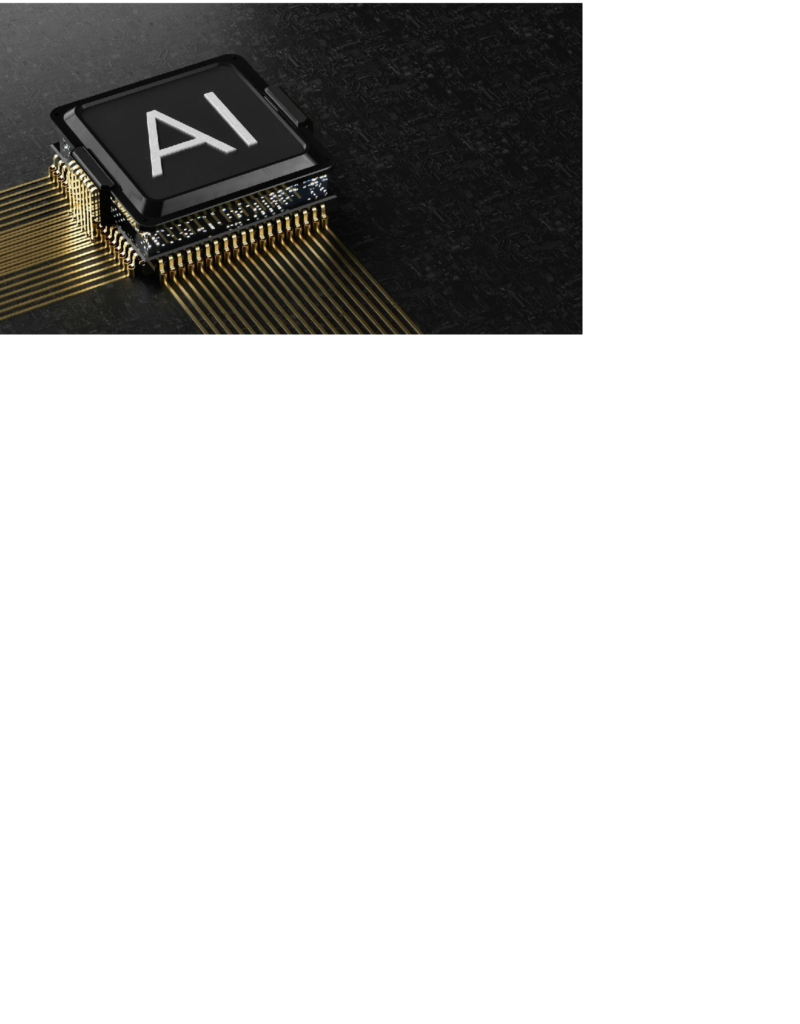
Photo By: Igor Omilaev Latham & Watkins recently made an unusual investment for a law firm: its own Nvidia-powered AI servers. The firm is using that infrastructure to fine-tune open-weight AI models while continuing to use commercial tools such as ChatGPT, Claude and Gemini. Rather than replacing outside AI providers, Latham is building an internal option alongside them, giving its engineers more control over how certain models are customized and deployed. That distinction may matter beyond the legal industry. As AI becomes embedded in increasingly sensitive and specialized business processes, enterprises may be entering a new phase of AI adoption in which the question is no longer simply whether to build or buy. Instead, companies may increasingly combine the two: buying general-purpose capabilities while building or controlling the layers that are most important to their own businesses.
The Build-or-Buy Question Is Becoming More Complicated For much of the generative AI boom, the enterprise model was straightforward. A company could access increasingly capable models through an API or software platform without having to operate the underlying computing infrastructure. For many applications, that still makes sense. But the calculus changes when AI becomes deeply connected to proprietary data, specialized workflows or consequential business decisions. An enterprise may care not only about what a model can do, but also where it runs, how it can be customized, how much control it has over its data and how dependent it becomes on a particular provider. That is one reason open-weight models have attracted growing enterprise attention. Recent analysis from the Financial Times points to their appeal around customization, cost and data privacy, while Gartner has identified open-weight models as an increasingly relevant part of enterprise AI strategies. The result is less a rejection of commercial AI than a diversification of the stack.
Buy the Commodity. Build the Differentiator. The emerging enterprise AI architecture may therefore look less like a binary choice and more like a portfolio. A company might use a frontier commercial model for a general reasoning task, an open-weight model for a specialized workflow, its own infrastructure for particularly sensitive workloads, and custom software to connect those systems to proprietary data. The objective isn’t necessarily to build a better foundation model than the companies spending billions of dollars to develop them. It is to control the parts of AI that are strategically important to the business. That can include the data layer, evaluation systems, workflow orchestration, domain-specific customization or the infrastructure required for particular workloads. For some companies, the case for owning infrastructure may be compelling. For others, the capital, engineering and operational requirements will make an external provider the more rational choice. The important question is therefore not simply, “Should we build our own AI?” It is “Which parts of our AI stack are important enough to own?”
Why Latham’s Strategy Is Interesting Latham offers a useful case study because its approach doesn’t require choosing one side. The firm has reportedly spent several years developing its own Nvidia server infrastructure and is using it to fine-tune open-weight models, while retaining access to commercial AI systems. The strategy gives the firm additional flexibility in choosing the right model for different tasks, while keeping particularly sensitive work within the infrastructure it controls. That creates something enterprises increasingly value: optionality. If a commercial model is the best tool for a particular task, the company can use it. If a workload requires greater customization or control, the company has another route. This also changes the way enterprises can think about vendor dependence. Instead of locking an entire AI strategy into one provider, companies can build an architecture in which different models and deployment environments serve different purposes. That doesn’t mean every company should start buying GPUs. It means that as AI becomes more strategically important, some enterprises may decide that having an internal capability is valuable even if they continue buying most of their AI externally.
From General AI to Specialized Enterprise Intelligence The same logic applies at the application layer. The most important enterprise AI systems may not be the ones that simply provide access to the most powerful general-purpose model. They may be the systems designed around a specific business problem, proprietary data environment and decision-making process. Kapnova is one example of this approach. The company describes itself as an agentic revenue and profit optimization system for consumer brands, combining AI-driven signal discovery with quantitative methods designed to evaluate commercial decisions. Its platform is built around questions such as pricing, launches and marketing spend rather than general-purpose conversation. That reflects a broader shift: enterprises don’t necessarily need to own the entire AI stack to create specialized intelligence. They can combine general-purpose models, proprietary data, specialized quantitative systems and domain-specific software into something tailored to their own operating environment. For Kapnova CEO and co-founder James Sun, that distinction is central to how businesses should think about AI: the model is only one component of a much larger decision system.
The AI Stack May Become Hybrid by Design Latham’s investment doesn’t establish that enterprises are about to become AI infrastructure companies. Nor does it mean commercial models are losing their relevance. It points to a more nuanced possibility. As AI becomes increasingly embedded in business operations, enterprises may become more selective about what they buy, what they customize and what they control themselves. The next phase of enterprise AI may therefore not be defined by whether a company chooses to build or buy. It may be defined by knowing which parts of the AI stack are worth owning, and which are better left to someone else.

Artificial intelligence has officially reached higher education, and students, teachers, and administrators alike are following in the momentum. Across thousands of universities and educational institutions, many are now resorting to AI to draft papers, generate ideas, and conduct research in a matter of seconds. Due to these generative tools, the efficiency in school systems has never been more promising.
AI in education offers a number of unmatched benefits. It accelerates the learning process. Helps individuals think outside of the box. Computes complex data quickly. Eases the studying experience. Yet, beneath all of this convenience also lies numerous challenges.
According to The Center for Democracy and Technology cited in a CBS News article, approximately 85% of teachers and 86% of students used AI in the 2024-2025 school year, while 54% of students reported using AI weekly, and 25% said they use it every day. These numbers are continuing to spike, underscoring just how prevalent AI in schools has become.
With all this demand, many worry whether or not AI poses consequences like cheating scandals and academic integrity. A growing number of educators and workforce experts question whether this automation is actually making an impact, or if it is negatively affecting how students build their resumes and seek meaningful careers.
An emerging concept called people-centric AI aims to address this complexity. Instead of framing students as cheaters or replacing human intelligence, this idea puts students’ interests back at the forefront, uncovering where they add value best.
Companies like Advisor AI, founded by Arjun Arora, are part of this movement, operationalizing the education system by developing a platform to give institutions real-time visibility into student goals and progress. While school systems typically argue AI is risky, AI that puts humans first gives students the support they need to attain sustainable careers.
Crucially, prioritizing the human element vastly changes the advising experience as a whole. Academic advisors are finally able to better interpret recommendations, provide emotional intel, and help students set more meaningful intentions.
Additionally, this hybrid model is gaining traction as universities confront a widening career readiness gap. Employers increasingly report that graduates lack applied experience, professional networks, and clarity about career paths. At the same time, automation is reshaping entry-level roles as millions are starting to get replaced by these machines alone. However, with human-driven AI, it is becoming the framework all institutions and students need to survive in this labor market.
In a world where traditional jobs are changing at record speed, school systems must take preventative action right now. A recent labor market study shows more than 1.7 million jobs were replaced by AI in 2025 alone, and that kind of pressure is only rising.
Beyond the stark numbers, what happens next for higher education may depend on whether colleges treat AI as a threat or an opportunity. Forward-looking universities are rushing to deploy AI across several different departments, using it as a resource to improve the entire student journey. Instead of a static four-year experience, education is shifting toward a continuous model in which skills are updated and careers are moving in parallel with industry needs.
On the other hand, if universities hesitate, the result could become career barriers, a lack of preparedness, and unpredictable futures. Without using AI as a source to unveil human potential, students will go unnoticed and overlooked in this volatile market.
For students already in the midst of relying on AI to get work done, it is important to remember why automation is here in the first place. It may look like a means of cheating, but it also serves as a way to make well-informed career decisions.
AI may always feel like a hurdle, but like many educators might put it, there is also immense promise surrounding it. When designed around the student, it can illuminate pathways that were once unreachable, and it can also add clarity and resilience to anyone seeking a job post graduation.

Artificial intelligence has become an integral part of elite sports, quietly transforming how global events like the Olympics and the FIFA World Cup are prepared for, competed in, and experienced. What was once driven primarily by instinct and observation is now increasingly informed by data, algorithms, and advanced performance analysis, reshaping how teams compete and how analysts contribute to success on the world’s biggest stages.
Performance analysis has long been central to elite sport, but AI has expanded both its scale and speed. Modern tracking systems powered by machine learning and computer vision process vast quantities of data in real time, capturing player movement, positioning, and tactical behavior throughout competition and training. At major tournaments where the margin between victory and defeat is often minimal, these insights allow coaching staff to make quicker, more informed decisions. Rather than relying solely on post-event analysis, teams can adjust tactics during competition using live data that reveals emerging patterns and vulnerabilities.
AI has also become deeply embedded in athlete preparation and health management. Wearable sensors and monitoring technologies collect detailed physiological data such as workload, recovery, and fatigue indicators. AI systems analyze these signals to identify injury risks and guide individualized training plans. For Olympic athletes who may train for years for a single performance window, this precision can help preserve both peak condition and long-term health, while also improving consistency under pressure.
Despite the growing sophistication of AI tools, human analysts remain essential to translating data into competitive advantage. Wendy Lynch, PhD, founder of Analytic Translator and an expert in human behavior and technology adoption, explains that AI on its own does not create better decisions. Data must be interpreted within human, cultural, and situational contexts. Analysts play a critical role by framing AI-generated insights in ways coaches and athletes can understand, trust, and act upon. Without this translation layer, even the most advanced models risk being ignored or misapplied during high-stakes competition.
This partnership between human analysts and AI has shortened the distance between insight and action. By automating data collection and pattern recognition, AI allows analysts to focus on tactical interpretation and strategic communication. In fast-moving environments such as World Cup knockout rounds or Olympic finals, this collaboration enables teams to respond quickly while still relying on human judgment and experience.
Officiating has also been reshaped by AI-enabled technologies designed to improve fairness and consistency. Systems such as goal-line technology and semi-automated offside detection support referees by reducing human error and providing clearer evidence for decisions. Future developments, including AI-generated three-dimensional player models, aim to make complex rulings more transparent for players and fans alike, reinforcing trust rather than removing human oversight.
AI’s influence extends beyond competition into the fan experience. Broadcasters increasingly use AI to automate highlight production, generate real-time statistics, and tailor content to different audiences. At recent Olympic Games, these tools enhanced storytelling and analysis, offering viewers deeper insight into performance while maintaining the emotional appeal that defines global sport.
As AI becomes more embedded in elite competition, it also raises questions about access, equity, and over-reliance on automated systems. Advanced technologies are not evenly distributed, and sport must guard against widening gaps between those who can afford cutting-edge tools and those who cannot. There is also a need to ensure that data-driven decisions remain transparent and accountable.
When used responsibly, however, AI does not replace the human element that makes sport compelling. Instead, it amplifies it. At the Olympics and the World Cup, where performance, pressure, and public attention converge, the collaboration between AI systems and skilled analysts demonstrates that winning strategies still depend on human understanding, judgment, and the ability to turn insight into action.

What a Deck Inspection Typically Covers

Debra Bailey on Relationship Difficulties and the Limits of Psychological Explanation

Why Enterprises May Be Entering an AI ‘Build and Buy’ Era
Best Car Upgrades for a More Comfortable Daily Drive

Yifeng Zhang Princem and the Role of Hotel Brand Partnerships in Destination Development
What David Leavy’s Public Service Career Reveals About His Approach to Media

Yifeng Zhang Family Office and the Multi-Decade Horizon for Real Estate Acquisitions

How Chantal Leduc Balances Client Input With Professional Judgment

Debra Bailey and the Research on Alcohol Use and Aggression in Her Academic Work

Chantal Leduc Los Angeles: A Distinct Approach to Styling Formality
-
 Destinations2 years ago
All-Inclusive Resorts Outside The Caribbean!
-
 Destinations2 years ago
Touring Nashville!
-
 Destinations2 years ago
Safe Travel Spots For Travel Currently
-
 Destinations2 years ago
Stay With The Animals At These Awesome Hotels
-
 Destinations2 years ago
The Best Cruises For Every Family Type
-

 Destinations2 years ago
The Cheapest Travel Destinations in the World in 2020
-
 Destinations2 years ago
Cheapest Caribbean Destination: Punta Cana VS Cancun
-
 Featured2 years ago
How To Make A Healthy Gas Station Meal