
Uncategorized
How to Choose the Right Chiller Capacity for Your Application


Selecting the correct chiller capacity is one of the most important decisions you’ll make when investing in industrial cooling equipment. An undersized chiller struggles to keep up with demand, leading to inconsistent temperatures and premature wear. An oversized unit costs more upfront, cycles inefficiently, and wastes energy over its lifetime. Getting the sizing right from the start saves money, protects your equipment, and keeps your operations running smoothly.
Start With Your Heat Load Calculation
Before you can choose an industrial chiller, you need to understand exactly how much heat your process generates. This is called the heat load, and it’s the foundation of every sizing decision. Heat load depends on several factors: the type of equipment or process being cooled, the ambient temperature of your facility, the desired output temperature, and how continuously the system operates.
Manufacturing processes like injection molding, laser cutting, and CNC machining each generate different amounts of heat depending on cycle times and material types. Chemical and pharmaceutical applications may require precise temperature control across long production runs. Taking the time to calculate your actual thermal load, rather than estimating, prevents costly sizing mistakes down the line.
Consider Your Process Requirements
Every application has unique cooling needs, and understanding yours will help narrow down the right chiller capacity. Ask yourself how tight your temperature tolerance needs to be. Some processes can tolerate a few degrees of fluctuation, while others, like certain laboratory or pharmaceutical applications, demand extremely stable and precise temperatures.
You’ll also want to consider whether your cooling demand is constant or variable. A process that runs at full capacity around the clock has different requirements than one with intermittent peaks and idle periods. If your operation experiences seasonal demand changes or plans to scale production in the future, factor that flexibility into your capacity planning now rather than retrofitting later.
Account for Ambient Conditions
The environment surrounding your chiller has a direct impact on its performance and required capacity. Air-cooled chillers, in particular, are sensitive to ambient temperature because they rely on surrounding air to dissipate heat. A facility located in a hot climate or one that experiences seasonal temperature swings needs a chiller rated to handle those conditions without losing efficiency.
Indoor installations also need adequate ventilation and airflow to support the chiller’s cooling process. If your equipment sits in a room with poor air circulation or is placed near other heat-generating machinery, this can effectively increase the ambient load and require additional capacity to compensate.
Factor In Safety Margins
While it might seem logical to size a chiller exactly to your calculated heat load, most experts recommend building in a safety margin. This buffer accounts for unexpected process changes, equipment aging, and fluctuations in production that aren’t always predictable during the planning phase.
A modest safety margin protects against underperformance without pushing you into the inefficiencies of a significantly oversized unit. The right buffer depends on how predictable your process is and how much risk your operation can tolerate if the chiller falls short during peak demand.
Choose Between Air-Cooled and Water-Cooled Systems
Capacity isn’t the only decision you’ll face. The type of chiller you select also affects overall performance and suitability for your application. Air-cooled chillers are generally easier to install and maintain since they don’t require a cooling tower or water source, making them a popular choice for facilities with limited infrastructure.
Water-cooled chillers, on the other hand, tend to operate more efficiently in high-heat environments and are often favored for larger industrial applications with continuous, heavy-duty cooling demands. Your choice here should align with both your capacity needs and your facility’s existing infrastructure.
Avoid Common Sizing Mistakes
One of the most frequent errors businesses make is relying on rough estimates or generic industry benchmarks instead of a detailed heat load analysis specific to their process. Every facility is different, and copying a sizing decision from a similar-looking operation can lead to significant inefficiencies.
Another common mistake is failing to plan for future growth. If you anticipate expanding production or adding equipment, it’s worth discussing scalable options with a cooling specialist rather than choosing a chiller that only meets today’s needs.
Work With a Cooling Specialist
Given how many variables factor into proper chiller sizing, partnering with an experienced provider makes the process significantly easier. A knowledgeable specialist can help you calculate heat load accurately, account for ambient conditions, and recommend a capacity that balances performance with long-term efficiency.
Choosing the right industrial chiller capacity isn’t just about avoiding breakdowns. It’s about building a cooling system that supports consistent product quality, protects your equipment investment, and keeps operational costs under control for years to come.

Small businesses make tempting targets. Hackers know local shops, clinics, and firms often lack the defenses that big corporations build, which makes them easier to breach. The good news is that strong protection doesn’t require an enterprise budget. With a few smart habits and the support of managed IT and cyber security services, you can dramatically reduce your risk. Below, we’ll walk through practical, affordable steps any local business can take to lock down its systems and protect what matters most.
Start With Strong Passwords
Weak passwords remain one of the easiest ways for criminals to get in. A single stolen or guessed password can open the door to your entire network.
Require every employee to use long, unique passwords for each account. Encourage passphrases—a string of random words is both stronger and easier to remember than a jumble of symbols. Better yet, roll out a password manager. It generates tough passwords, stores them safely, and removes the temptation to reuse the same login everywhere.
Keep Your Software Updated
Outdated software is a goldmine for attackers. Every update often patches security holes that criminals actively exploit. Skip those updates, and you leave known weaknesses wide open.
Turn on automatic updates for your operating systems, browsers, and business apps. Don’t forget the tools people overlook, like plugins, printers, and router firmware. Set a monthly reminder to check that everything is current. This simple habit closes gaps before hackers can slip through.
Train Your Employees
Your team is your first line of defense—or your biggest weak spot. Most breaches start with human error, like clicking a fake link or opening a malicious attachment.
Teach your staff to spot phishing emails, suspicious downloads, and social engineering tricks. Run short, regular training sessions instead of one long lecture nobody remembers. Send a few test phishing emails to see who bites, then coach them without blame. When employees understand the risks, they become a powerful shield rather than an open door.
Secure Your Network
An unprotected network invites trouble. Anyone within range or online could try to sneak in and snoop on your data.
Start with the basics:
- Change default router passwords immediately
- Use strong Wi-Fi encryption like WPA3
- Set up a separate guest network for visitors and customers
- Install and maintain a business-grade firewall
- Keep sensitive systems off public or shared connections
These steps create real barriers between your data and anyone trying to reach it.
Add Multi-Factor Authentication
Even a strong password can be stolen. Multi-factor authentication, or MFA, adds a second layer that stops most break-ins cold.
With MFA, logging in requires something extra—a code from a phone app, a text message, or a fingerprint. So even if a criminal grabs a password, they still can’t get in without that second step. Turn on MFA for email, banking, cloud storage, and any account holding sensitive information. It’s one of the cheapest, most effective protections available.
Back Up Your Data Regularly
Ransomware and hardware failures can wipe out your files in seconds. Reliable backups let you bounce back fast instead of paying a ransom or losing everything.
Follow the 3-2-1 rule: keep three copies of your data, on two types of storage, with one stored offsite or in the cloud. Test your backups now and then to confirm they actually work. A backup you’ve never tested is just a guess.
Partner With IT Security Professionals
Some threats need expert eyes. A dedicated provider monitors your systems around the clock, spots problems early, and responds fast when something goes wrong. They also keep you compliant with regulations and free you to focus on running your business.
Take Action Today
Strong passwords, timely updates, trained staff, secure networks, MFA, and solid backups form a defense that protects your business, your customers, and your reputation. Don’t wait for a breach to expose your gaps. Reach out to a trusted IT security provider today, and give your business the protection it deserves.
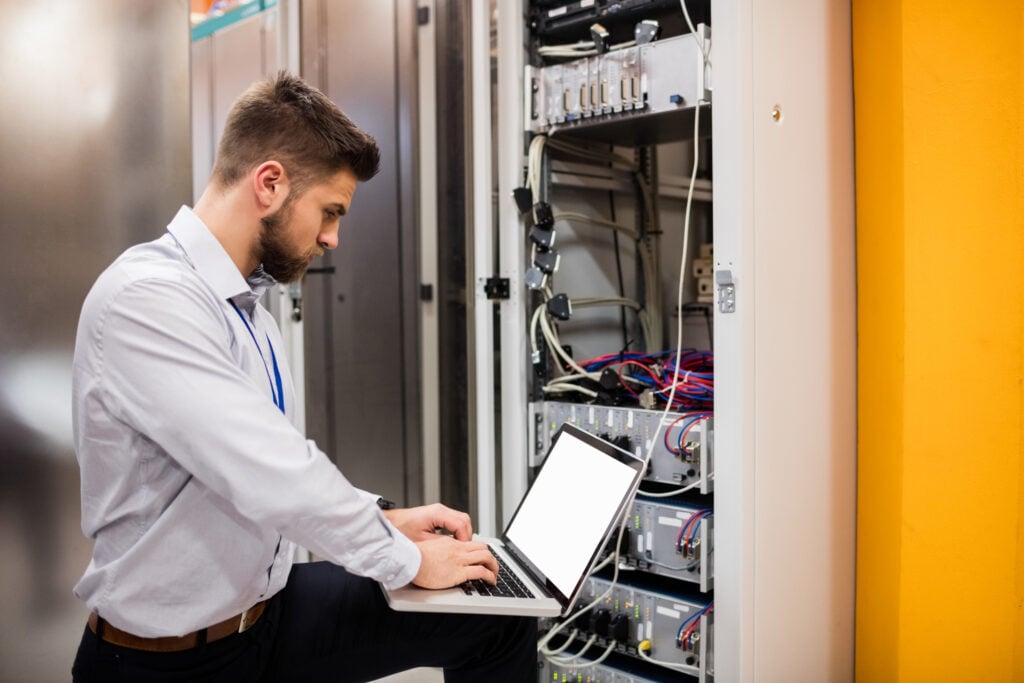
Business data has become one of the most valuable assets a company owns, and it’s also one of the most vulnerable. Every day, businesses of all sizes face threats ranging from phishing scams to ransomware attacks, and the consequences of a breach can be devastating. This is where managed IT security steps in, offering a proactive, comprehensive approach to protecting sensitive information before problems arise.
What Is Managed IT Security?
Managed IT security refers to the practice of outsourcing your organization’s cybersecurity needs to a specialized third-party provider. Rather than relying solely on an in-house team, businesses partner with managed IT professionals who monitor, maintain, and defend their networks around the clock. This approach gives companies access to advanced tools, expert knowledge, and continuous oversight that would otherwise be difficult and costly to build internally.
Managed IT providers typically handle everything from firewall management and antivirus updates to threat detection and incident response. The goal is simple: keep your systems secure so you can focus on running your business without constantly worrying about the next cyber threat.
Proactive Threat Monitoring
One of the biggest advantages of managed IT security is continuous monitoring. Cybercriminals don’t operate on a nine-to-five schedule, and neither do the systems designed to stop them. Managed IT teams use sophisticated monitoring tools to watch network traffic, flag unusual behavior, and respond to potential threats in real time.
This proactive stance is a significant shift from the reactive approach many businesses take, where issues are only addressed after damage has already occurred. By identifying vulnerabilities and suspicious activity early, managed IT security helps prevent minor issues from escalating into major breaches.
Data Encryption and Access Control
Protecting business data isn’t just about stopping outside attackers, it’s also about controlling who can access sensitive information in the first place. Managed IT security services often include robust encryption protocols that make data unreadable to anyone without proper authorization. Whether information is stored on a server or transmitted across networks, encryption acts as a critical layer of defense.
Alongside encryption, access control measures ensure that employees only have access to the data necessary for their roles. This reduces the risk of internal data leaks and limits the potential damage if a login credential is ever compromised. Managed IT providers can set up and manage these permissions efficiently, adjusting them as your business evolves.
Regular Software Updates and Patch Management
Outdated software is one of the most common entry points for cyberattacks. Hackers actively search for unpatched vulnerabilities in operating systems and applications, and even a small oversight can leave the door wide open. Keeping every device and application updated manually can be a time-consuming task, especially for businesses with limited internal IT resources.
Managed IT security services take this burden off your plate by handling patch management systematically. Updates are applied consistently across all systems, closing security gaps before they can be exploited. This ongoing maintenance is often invisible to daily operations, but it plays a crucial role in keeping your data protected.
Disaster Recovery and Business Continuity
Even with the best preventive measures in place, no system is completely immune to incidents. Whether it’s a natural disaster, hardware failure, or a successful cyberattack, having a solid disaster recovery plan is essential. Managed IT security providers help businesses prepare for the unexpected by implementing regular data backups and creating detailed recovery strategies.
This means that if something does go wrong, your business can restore critical data quickly and minimize downtime. Business continuity planning ensures that operations can resume with as little disruption as possible, protecting not just your data but your reputation and customer trust as well.
Compliance and Risk Management
Many industries are subject to strict regulations regarding data protection, and failing to comply can result in significant financial and legal consequences. Managed IT security providers stay current on relevant compliance standards and help businesses implement the necessary safeguards to meet these requirements.
Beyond compliance, these providers also conduct regular risk assessments to identify weaknesses in your current security posture. This ongoing evaluation allows businesses to adapt their defenses as new threats emerge, rather than relying on a static security plan that quickly becomes outdated.
Protecting What Matters Most
Business data represents years of hard work, customer relationships, and strategic planning. Losing that data or having it fall into the wrong hands can set a company back significantly, both financially and reputationally. Managed IT security offers a comprehensive shield against these risks, combining proactive monitoring, strong access controls, consistent updates, and solid recovery planning into one cohesive strategy.
For businesses looking to safeguard their most valuable digital assets, investing in managed IT security isn’t just a smart move, it’s becoming a necessary one in an increasingly connected business landscape.

Sleep quality often gets blamed on stress, screen time, or too much coffee before bed. But one of the biggest culprits hides in plain sight: the mattress you sleep on every night. If it doesn’t match your body’s specific needs, no amount of sleep hygiene tricks will fully solve the problem. That’s where a custom mattress comes in, offering a solution tailored to you rather than a generic average of what “most people” supposedly need.
Why One-Size-Fits-All Doesn’t Work for Sleep
Standard mattresses are built for the broadest possible audience. Manufacturers design them to feel acceptable to as many body types and sleep styles as possible, which means they rarely feel ideal for anyone. A side sleeper and a back sleeper have very different pressure points. Someone who runs hot at night needs different materials than someone who’s always reaching for another blanket. A custom mattress removes the guesswork by building the bed around your actual sleep profile instead of forcing you to adapt to it.
Personalized Support Where You Actually Need It
One of the most significant advantages of a custom mattress is targeted support. Your spine has natural curves, and your hips, shoulders, and lower back all carry weight differently depending on how you sleep. A custom-built mattress can adjust firmness zone by zone, offering softer give under the shoulders and hips while reinforcing support under the lower back. This kind of precision helps keep your spine aligned throughout the night, which reduces the tossing and turning that comes from your body trying to find a comfortable position on a mattress that wasn’t built for it.
Temperature Regulation Tailored to You
Sleep quality drops fast when you’re too hot or too cold. Custom mattresses allow you to select materials and layers based on your temperature preferences, whether that means breathable, moisture-wicking covers, cooling gel-infused foams, or more traditional materials that retain warmth. Instead of settling for whatever thermal properties came standard with an off-the-shelf model, you get a sleep surface that actually matches how your body regulates heat, which means fewer middle-of-the-night wake-ups to kick off the covers or pull them back on.
Addressing Specific Pain Points and Health Needs
People dealing with chronic back pain, joint issues, or recovery from an injury often struggle to find relief from a standard mattress. A custom mattress lets you address these concerns directly, whether that means additional lumbar support, pressure-relieving foam near sensitive joints, or a firmer core for people who need more structural support. Rather than layering on mattress toppers and pillows to compensate for a bed that doesn’t quite work, you’re solving the problem at its source.
Better Sleep for Couples with Different Needs
Sharing a bed often means compromising. One partner wants a firmer surface, and the other prefers something plush. One runs warm, and the other is always cold. Traditional mattresses force couples to find a middle ground that doesn’t fully satisfy either person. Many custom mattress options solve this by allowing split configurations, where each side of the bed is built to that individual’s specifications. This means both partners can get the support and comfort they need without sacrificing a good night’s sleep for the sake of sharing a bed.
The Long-Term Payoff
Investing in a custom mattress isn’t just about immediate comfort. Consistent, high-quality sleep affects nearly every part of daily life, from mood and focus to physical recovery and long-term health. When a mattress is built specifically for your body and preferences, you’re more likely to fall asleep faster, stay asleep longer, and wake up without the aches and stiffness that come from fighting your bed all night. Over time, this translates into more energy, better concentration, and an overall improved quality of life.
Making the Switch
Transitioning to a custom mattress usually starts with an assessment of your sleep habits, body type, and any specific concerns like pain points or temperature sensitivity. From there, the mattress is built layer by layer to reflect those needs. While it requires a bit more thought than picking a mattress off a showroom floor, the payoff is a sleep surface that actually works with your body instead of against it. For anyone who has struggled with restless nights despite trying every gadget and sleep tip available, the answer might simply be a mattress that was never designed to fit you in the first place.

Chantal Leduc Los Angeles: A Distinct Approach to Styling Formality

Debra Bailey and the Research on Alcohol Use and Aggression in Her Academic Work

How Chantal Leduc Balances Client Input With Professional Judgment
What David Leavy’s Public Service Career Reveals About His Approach to Media

Yifeng Zhang Family Office and the Multi-Decade Horizon for Real Estate Acquisitions

Top Tips to Help Visibility on Big G and LLMs

How Managed IT Security Protects Your Business Data

How Local Businesses Can Improve Their IT Security
What David Leavy’s Public Service Career Reveals About His Approach to Media
How Chantal Leduc Balances Client Input With Professional Judgment
-
 Destinations2 years ago
All-Inclusive Resorts Outside The Caribbean!
-
 Destinations2 years ago
Touring Nashville!
-
 Destinations2 years ago
Safe Travel Spots For Travel Currently
-
 Destinations2 years ago
Stay With The Animals At These Awesome Hotels
-
 Destinations2 years ago
The Best Cruises For Every Family Type
-

 Destinations2 years ago
The Cheapest Travel Destinations in the World in 2020
-
 Destinations2 years ago
Cheapest Caribbean Destination: Punta Cana VS Cancun
-
 Featured2 years ago
How To Make A Healthy Gas Station Meal